
The global online forecasting industry is evolving rapidly as businesses and entrepreneurs explore smarter ways to predict real-world outcomes. From sports and politics to finance and entertainment, prediction markets are becoming one of the most innovative digital business models in the modern tech landscape. As demand grows, Prediction Market Software Development is playing a major role in reshaping how forecasting platforms operate, engage users, and generate revenue.
Today, startups and enterprises are investing heavily in scalable prediction market ecosystems inspired by platforms like Polymarket and Kalshi. Advanced technologies such as blockchain, artificial intelligence, smart contracts, and real-time analytics are transforming traditional forecasting systems into highly interactive and transparent platforms.
Growing Demand for Prediction Market Platforms
Prediction markets are digital platforms where users forecast the outcomes of future events using virtual or real-money trading mechanisms. These platforms collect public opinions and convert them into market-driven probabilities, helping businesses and users make data-backed decisions.
The growing popularity of decentralized finance (DeFi) and blockchain technology has accelerated the need for secure and scalable prediction market systems. As a result, companies worldwide are now focusing on Prediction market platform development to launch customized forecasting solutions for multiple industries.
Industries currently adopting prediction market platforms include:
Financial trading
Cryptocurrency forecasting
Sports betting analytics
Political event forecasting
Entertainment predictions
Business intelligence platforms
This growing adoption is creating new opportunities for software companies specializing in modern prediction market architecture.
Why Prediction Market Software Development Matters
The success of any forecasting platform depends on speed, security, user engagement, and transparency. This is where Prediction Market Software Development becomes critical.
Modern prediction market software includes advanced features such as:
Smart contract integration
Real-time market data
AI-powered analytics
Multi-wallet support
Blockchain-based transparency
Secure payment gateways
User-friendly dashboards
Liquidity management systems
These features help businesses create reliable forecasting ecosystems while improving user trust and platform performance.
Developers are now building highly scalable infrastructures capable of handling millions of transactions while maintaining decentralized security protocols. This technological advancement is transforming online forecasting from a niche concept into a mainstream digital business model.
Blockchain Technology is Driving Innovation
One of the biggest reasons behind the rise of prediction markets is blockchain integration. Blockchain technology ensures transparency, security, and tamper-proof transaction records, which are essential for any forecasting platform.
Many companies entering the market are choosing decentralized solutions because they eliminate intermediaries and reduce operational costs. Blockchain-powered platforms also improve fairness by automating settlements through smart contracts.
This has led to growing demand for solutions such as the Polymarket clone script, which allows businesses to launch decentralized prediction markets with features similar to leading platforms.
A modern Polymarket clone script typically includes:
Decentralized architecture
Crypto wallet integration
Automated smart contracts
Real-time trading engine
User portfolio management
Market creation tools
Liquidity pool management
Businesses prefer clone-based solutions because they reduce development time and accelerate platform launch.
Rise of Kalshi-Inspired Prediction Platforms
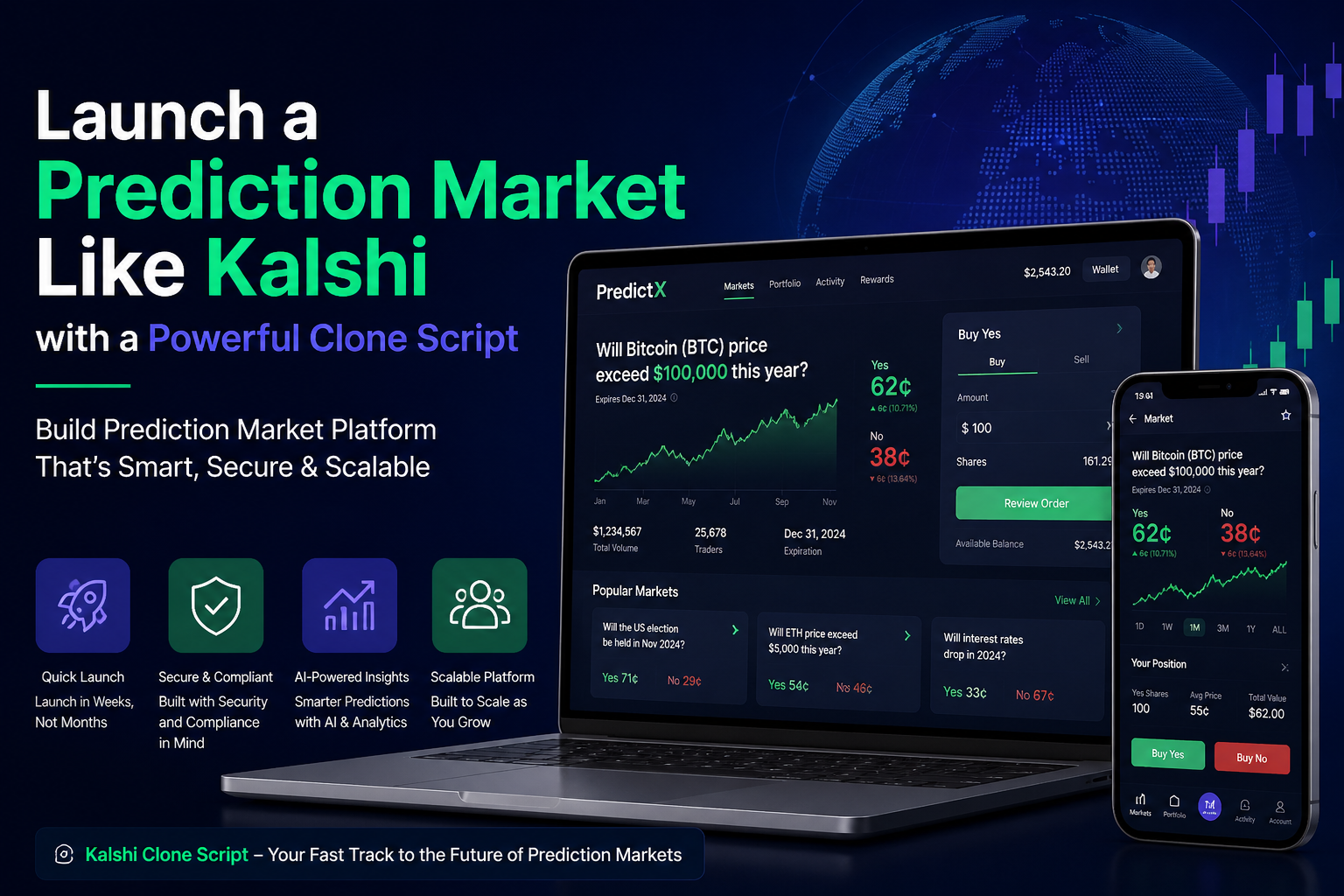
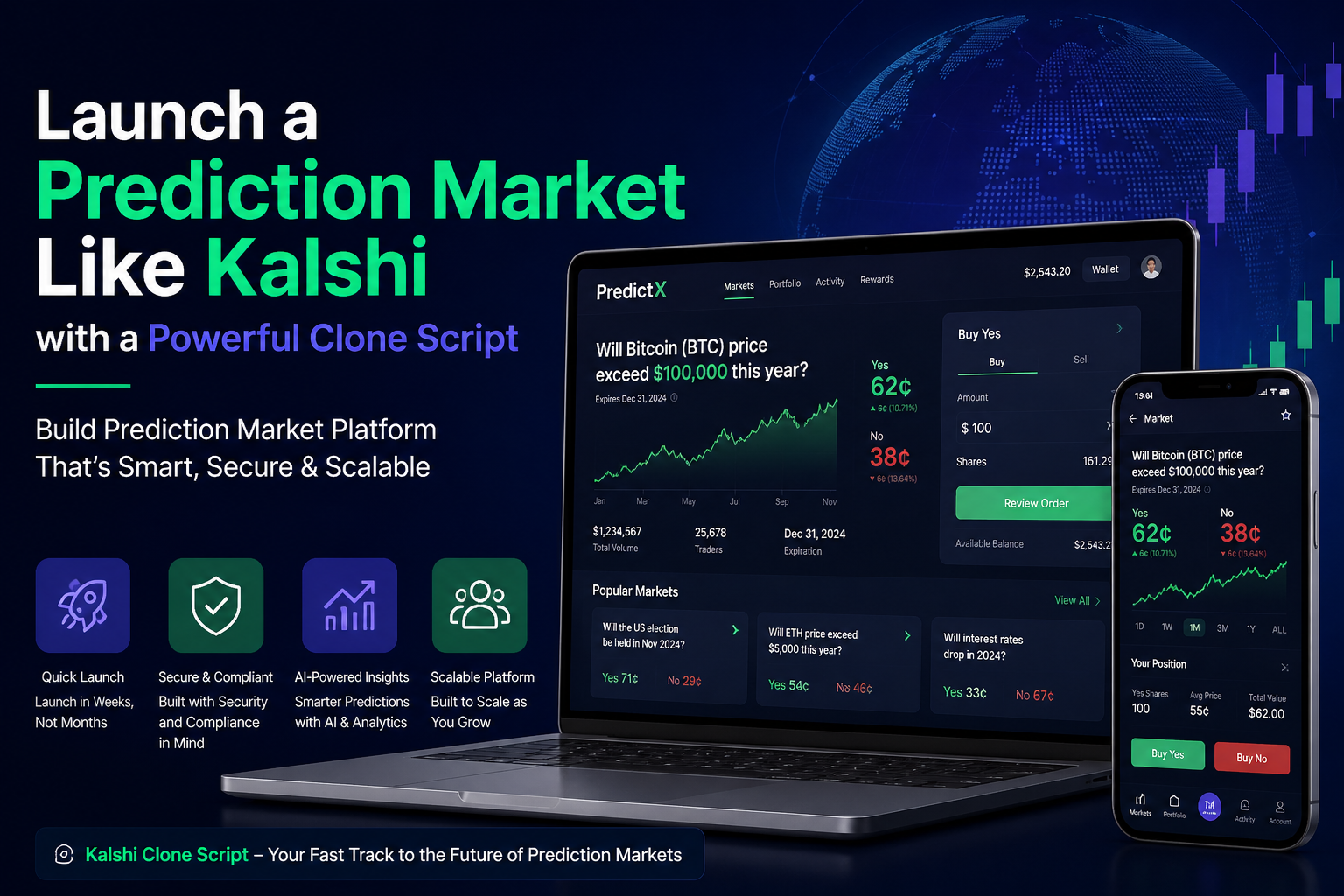
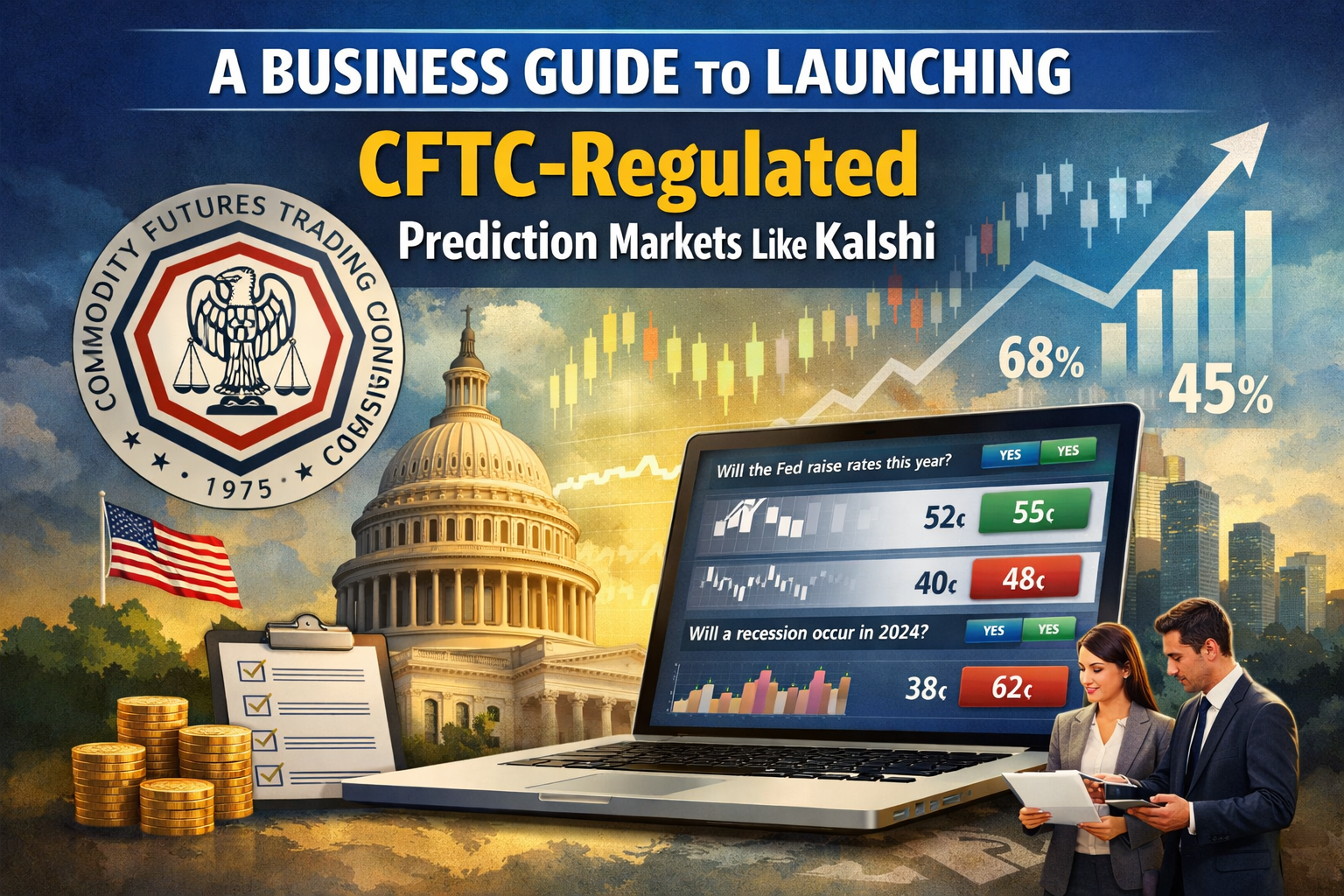
Regulated prediction markets are also gaining traction globally. Platforms inspired by Kalshi are attracting entrepreneurs who want to create legally compliant forecasting ecosystems.
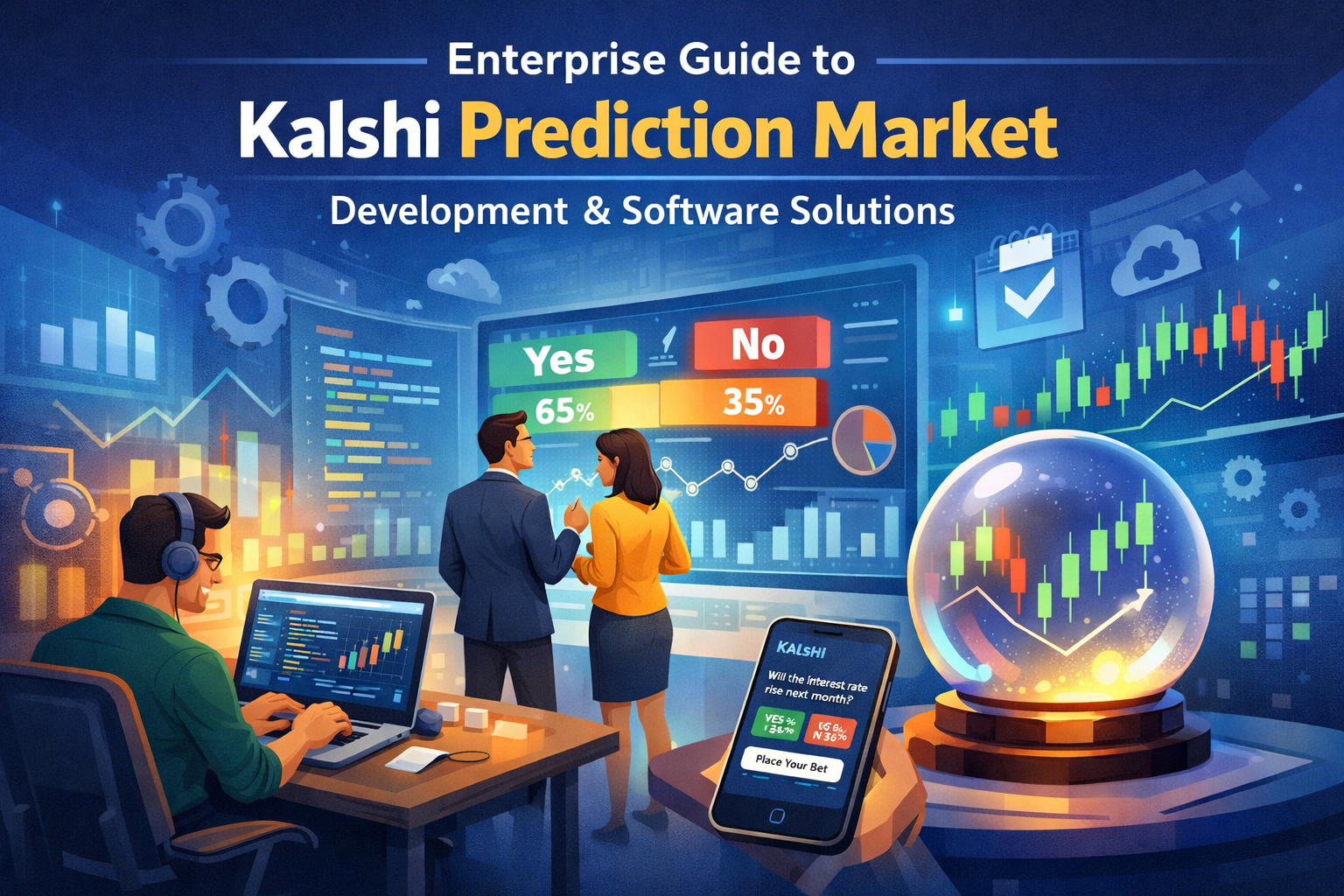
This growing interest has significantly increased demand for the Kalshi clone script market. Businesses are using these solutions to build event-driven trading platforms focused on finance, economics, sports, and political forecasting.
A reliable Kalshi clone script offers features like:
Regulatory compliance modules
Real-money trading systems
Risk management tools
Advanced admin dashboards
Market settlement automation
User verification systems
Trading analytics
These solutions help startups enter the market faster while reducing development complexity and infrastructure costs.
AI and Data Analytics are Improving Forecast Accuracy
Artificial intelligence is becoming a key component of modern forecasting systems. AI-powered prediction platforms can analyze massive datasets, identify trends, and provide better insights for users.
Through machine learning algorithms, prediction markets can now:
Detect user behavior patterns
Improve market recommendations
Analyze historical forecasting data
Enhance fraud detection systems
Optimize liquidity management
This combination of AI and Prediction Market Software Development is creating more intelligent forecasting platforms that deliver improved accuracy and better user experiences.
Businesses are increasingly integrating predictive analytics tools into their platforms to stay competitive in the rapidly expanding forecasting industry.
Businesses are Adopting White-Label Solutions
Many startups prefer ready-made software solutions instead of building platforms entirely from scratch. White-label development models are becoming highly popular because they reduce launch time and minimize operational expenses.
Today, software companies offer customizable solutions for:
Cryptocurrency prediction platforms
Sports forecasting systems
Political event markets
Financial prediction exchanges
NFT-based forecasting ecosystems
The demand for scalable Prediction market platform development services is expected to rise significantly over the next few years as more entrepreneurs enter the industry.
Businesses are particularly attracted to white-label solutions because they provide:
Faster deployment
Lower development costs
Custom branding options
Technical support
Scalable infrastructure
Enhanced security systems
This trend is helping the prediction market industry grow at a much faster pace globally.
Security and Compliance Remain Top Priorities
As online forecasting platforms continue to expand, security and regulatory compliance remain major concerns for businesses and users alike.
Modern Prediction Market Software Development focuses heavily on:
End-to-end encryption
Anti-fraud systems
Secure wallet integrations
KYC and AML compliance
Smart contract auditing
Data privacy protection
Companies investing in secure and compliant infrastructures are more likely to gain long-term user trust and market credibility.
Industry experts believe regulatory frameworks for prediction markets will continue evolving, creating additional opportunities for businesses offering compliant software solutions.
Future of Online Forecasting Platforms
The future of prediction markets looks highly promising as technology continues to advance. Blockchain, AI, decentralized finance, and data-driven forecasting are expected to redefine how users interact with online prediction ecosystems.
Experts predict that future platforms will include:
AI-generated prediction models
Cross-chain interoperability
NFT-based market participation
Decentralized governance systems
Advanced social trading features
Real-time global forecasting exchanges
As the industry matures, businesses investing in high-quality Prediction Market Software Development will likely dominate the next generation of digital forecasting platforms.
With rising demand for decentralized systems, solutions like the Polymarket clone script and Kalshi clone script are expected to become essential tools for entrepreneurs looking to build scalable and innovative prediction market businesses.
The rapid transformation of online forecasting platforms clearly shows that prediction market technology is no longer just a trend—it is becoming a major part of the future digital economy.













Write a comment ...